

Heavy suspension systems are crucial components in various heavy - duty vehicles and equipment, playing a vital role in ensuring stability, safety, and load - carrying capacity. As a heavy suspension supplier, I have in - depth knowledge of how these systems work, and I'm excited to share this information with you.
The Basics of Heavy Suspension
At its core, a heavy suspension system is designed to support the weight of the vehicle and its load while providing a smooth ride. It does this by absorbing shocks and vibrations caused by uneven road surfaces, bumps, and sudden movements. The main components of a heavy suspension system typically include springs, shock absorbers, linkages, and axles.
Springs are the primary load - bearing elements in a suspension system. They come in different types, such as leaf springs, coil springs, and air springs. Leaf springs are commonly used in heavy - duty trucks and trailers. They consist of multiple layers of metal strips (leaves) stacked on top of each other. When a load is applied, the leaves flex, absorbing the energy and distributing the weight evenly across the axle. Coil springs, on the other hand, are made of a coiled wire. They are more compact and can provide a more precise spring rate, which is the amount of force required to compress the spring by a certain distance. Air springs use compressed air to support the load. They offer several advantages, including adjustable ride height and the ability to adapt to different loads.
Shock absorbers, also known as dampers, work in conjunction with the springs to control the movement of the suspension. They prevent the springs from bouncing too much after being compressed or extended. Shock absorbers use hydraulic fluid to resist the motion of the suspension. When the suspension moves, a piston inside the shock absorber forces the fluid through small holes or valves, creating resistance and dissipating the energy as heat.
Linkages are used to connect the various components of the suspension system to the vehicle's frame and axles. They ensure that the suspension moves in a controlled and predictable manner. Different types of linkages, such as control arms, trailing arms, and sway bars, are used depending on the design of the suspension system.
How Heavy Suspension Works in Different Applications
Heavy - Duty Trucks
In heavy - duty trucks, the suspension system must be able to handle large loads and rough road conditions. Most heavy - duty trucks use leaf spring suspensions on the rear axles. The leaf springs are attached to the axle housing and the truck's frame. As the truck moves over bumps or uneven surfaces, the leaf springs flex, absorbing the shocks. The shock absorbers help to dampen the oscillations of the springs, preventing the truck from bouncing excessively.
The front suspension of heavy - duty trucks is often more complex. It may use a combination of coil springs, control arms, and shock absorbers. The front suspension is responsible for steering and supporting the weight of the engine and the front of the truck. It needs to provide a smooth ride while also allowing for precise steering control.
Trailers
Trailers rely heavily on their suspension systems to ensure the safe transportation of goods. Trailer suspensions can be either spring - based or air - based. Trailer Air Suspension systems are becoming increasingly popular in trailers due to their ability to provide a smoother ride and better load distribution.
In a trailer with an air suspension system, air springs are used to support the load. The air pressure in the springs can be adjusted depending on the weight of the cargo. This allows the trailer to maintain a level ride height, regardless of the load. The shock absorbers in a trailer suspension work in the same way as those in a truck suspension, controlling the movement of the springs and providing a stable ride.
Trailers also often use Drum Brake Axle systems in conjunction with their suspension. The axles support the weight of the trailer and its load, and the drum brakes are used to slow down or stop the trailer. The suspension system helps to keep the axles in the correct position and ensures that the brakes work effectively.
Construction Equipment
Heavy construction equipment, such as bulldozers, excavators, and loaders, also require robust suspension systems. These machines operate in harsh environments and need to be able to handle heavy loads and extreme terrain. The suspension systems in construction equipment are designed to provide stability and mobility.
For example, in a bulldozer, the suspension system may use a combination of tracks and hydraulic cylinders. The tracks provide traction on rough surfaces, and the hydraulic cylinders act as shock absorbers, absorbing the shocks caused by the movement of the bulldozer over uneven ground. The suspension system also helps to keep the blade of the bulldozer in the correct position for efficient earth - moving operations.
The Role of Axles in Heavy Suspension
Axles are an integral part of the heavy suspension system. They support the weight of the vehicle and its load and transmit the power from the engine to the wheels. In heavy - duty applications, axles need to be strong and durable.
16T Axle is a type of heavy - duty axle that can support a load of up to 16 tons. These axles are commonly used in large trucks, trailers, and heavy - duty construction equipment. They are designed to withstand high stresses and provide reliable performance.

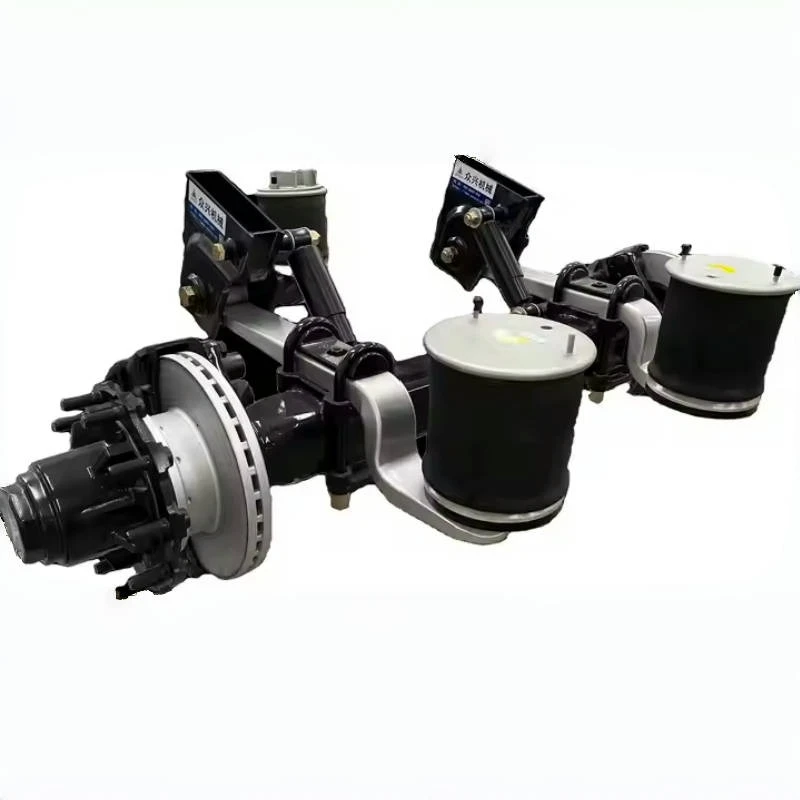
Axles can be either live axles or dead axles. Live axles are connected to the vehicle's drivetrain and rotate with the wheels. They are responsible for transmitting power from the engine to the wheels. Dead axles, on the other hand, do not rotate with the wheels and are used mainly for support. They are often found on trailers and some heavy - duty trucks.
Maintenance and Safety Considerations
Proper maintenance of the heavy suspension system is essential to ensure its safe and efficient operation. Regular inspections should be carried out to check for signs of wear and damage, such as worn - out springs, leaking shock absorbers, or loose linkages. Any damaged components should be replaced immediately to prevent further problems.
The alignment of the suspension system also needs to be checked regularly. Incorrect alignment can cause uneven tire wear, poor handling, and increased fuel consumption. Suspension alignment involves adjusting the angles of the wheels and axles to ensure that they are perpendicular to the ground and parallel to each other.
Safety is of utmost importance when it comes to heavy suspension systems. A faulty suspension system can lead to loss of control, accidents, and damage to the vehicle and its cargo. It is crucial to follow the manufacturer's recommendations for maintenance and use of the suspension system.
Conclusion
As a heavy suspension supplier, I understand the importance of a well - functioning suspension system in heavy - duty applications. Whether it's a heavy - duty truck, a trailer, or construction equipment, the suspension system plays a critical role in ensuring stability, safety, and load - carrying capacity. By understanding how heavy suspension works, vehicle owners and operators can make informed decisions about maintenance, upgrades, and replacement of suspension components.
If you are in the market for high - quality heavy suspension components, we are here to help. Our team of experts can provide you with the right products and solutions for your specific needs. Contact us to start a procurement discussion and find out how we can enhance the performance and safety of your heavy - duty vehicles and equipment.
References
- Automotive Engineering Handbook, SAE International
- Heavy - Duty Vehicle Technology, McGraw - Hill Education
- Trailer and Heavy Equipment Maintenance Manuals, Various Manufacturers


