

Hey there! As a supplier of Rear Dump Trailers, I often get asked about various maintenance tasks, and one of the most crucial ones is wheel alignment. Today, I'm gonna walk you through the process of aligning the wheels of a Rear Dump Trailer.
Why Wheel Alignment Matters
First off, let's talk about why wheel alignment is so important. When the wheels of your Rear Dump Trailer are properly aligned, it can significantly improve the trailer's handling. You won't have to fight the steering wheel as much, and the trailer will track straight down the road. This not only makes driving easier but also safer.
Proper wheel alignment also helps to extend the life of your tires. Misaligned wheels can cause uneven tire wear. You might notice that one side of the tire is wearing out much faster than the other. This not only means you'll have to replace your tires more often but can also lead to blowouts if the wear gets too bad.
Another benefit is fuel efficiency. When the wheels are misaligned, the trailer has to work harder to move forward. This extra effort translates into higher fuel consumption. So, by keeping your wheels aligned, you can save some money at the pump.
Tools You'll Need
Before we get started, let's gather the tools you'll need for this job. You'll need a tape measure, a straightedge, a camber gauge, a toe-in gauge, and a set of wrenches. These tools are pretty standard and can be found at most auto parts stores.
Step 1: Prepare the Trailer
The first step is to prepare the Rear Dump Trailer for the alignment process. Park the trailer on a flat, level surface. Make sure the trailer is unloaded, as the weight of the load can affect the alignment. Also, check the tire pressure and make sure it's at the recommended level. Incorrect tire pressure can give you inaccurate alignment readings.
Step 2: Check the Camber
Camber refers to the angle of the wheels when viewed from the front or rear of the trailer. A wheel with positive camber tilts outward at the top, while a wheel with negative camber tilts inward at the top. You can use a camber gauge to measure the camber of each wheel.
To adjust the camber, you'll need to loosen the bolts on the suspension components that control the camber angle. Then, use a wrench to turn the adjustment bolts until the camber is within the manufacturer's specifications. Once you've made the adjustment, tighten the bolts back up.
Step 3: Check the Toe
Toe is the angle at which the wheels point relative to each other when viewed from above. Toe-in means the front of the wheels are closer together than the rear, while toe-out means the front of the wheels are farther apart than the rear.
You can use a toe-in gauge to measure the toe of the wheels. Place the gauge on the tires at the front and rear of the trailer and take the measurements. If the toe is not within the recommended range, you'll need to adjust it.

To adjust the toe, you'll need to turn the tie rod ends. Loosen the lock nuts on the tie rod ends and then use a wrench to turn the rod. Turning the rod in one direction will increase the toe-in, while turning it in the other direction will increase the toe-out. Once you've made the adjustment, tighten the lock nuts back up.
Step 4: Check the Caster
Caster is the angle of the steering axis when viewed from the side of the trailer. It affects the steering stability and self-centering of the wheels. Measuring caster can be a bit more complicated than camber and toe, and you might need a specialized caster gauge.
If the caster is out of alignment, you'll need to adjust the suspension components that control the caster angle. This might involve loosening and tightening bolts or using shims to change the angle.
Step 5: Final Checks
Once you've made all the adjustments, it's time to do a final check. Measure the camber, toe, and caster again to make sure they're all within the manufacturer's specifications. You can also take the trailer for a short test drive to see how it handles. If it still doesn't feel right, you might need to go back and make some more adjustments.
Other Types of Trailers We Offer
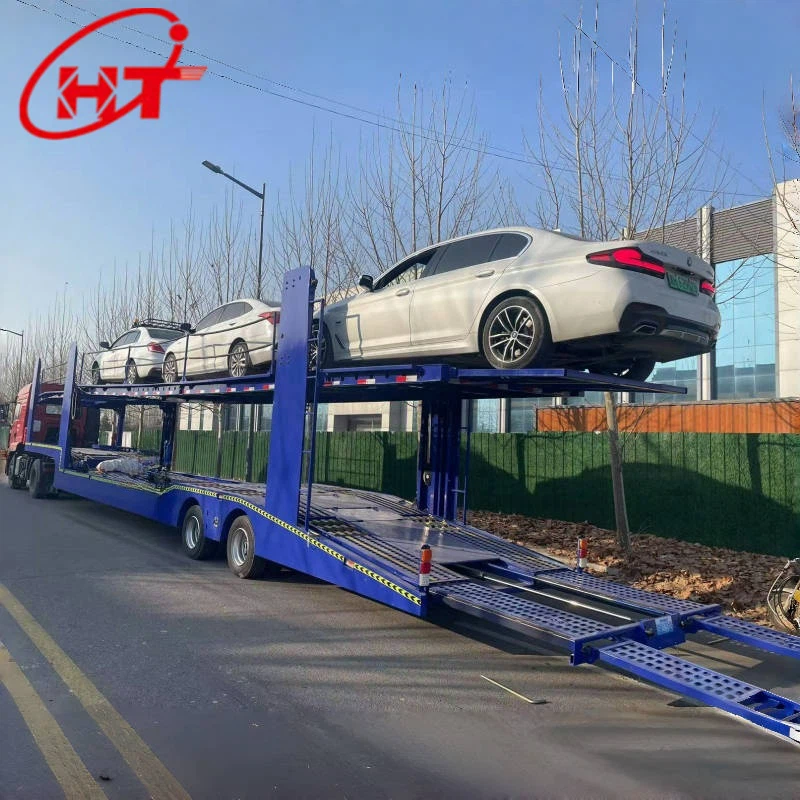
As a Rear Dump Trailer supplier, we also offer a wide range of other trailers. If you're in the market for a Vehicle Transport Semi Trailer, we've got you covered. These trailers are perfect for transporting cars, trucks, and other vehicles safely and efficiently.
We also have Cement Transport Trailers. These trailers are designed to transport cement and other bulk materials. They're built tough to handle the heavy loads and are equipped with features to ensure the safe and efficient delivery of your materials.
And if you need to transport multiple cars at once, our Double Decker Car Transport Vehicle is a great option. It can carry more cars in a single trip, which can save you time and money.
Conclusion
Aligning the wheels of a Rear Dump Trailer might seem like a daunting task, but with the right tools and a little know-how, you can do it yourself. Remember, proper wheel alignment is crucial for the safety, performance, and longevity of your trailer.
If you have any questions or need more information about our Rear Dump Trailers or any of our other products, don't hesitate to reach out. We're here to help you find the perfect trailer for your needs and provide you with the support you need to keep it in top condition.
References
- "Trailer Maintenance Guide" - General Trailer Manufacturer's Manual
- "Automotive Alignment Basics" - Auto Repair Magazine


