

What is the maximum weight a semi - trailer can carry?
As a seasoned supplier of semi - trailers, one of the most frequently asked questions I encounter is about the maximum weight a semi - trailer can carry. This is a crucial consideration for businesses involved in transportation, logistics, and heavy - hauling operations. Understanding the weight limits of semi - trailers is not only essential for compliance with regulations but also for ensuring safety on the roads and the efficient operation of the transportation process.
Factors Affecting the Maximum Carrying Capacity
The maximum weight a semi - trailer can carry is influenced by several key factors. Firstly, the design and construction of the trailer play a significant role. Trailers are engineered to handle different levels of stress and load. For example, a well - built 45ft Flat Bed Trailer is designed to distribute the weight evenly across its frame. The materials used in its construction, such as high - strength steel, can enhance its load - bearing capacity. The thickness of the steel, the design of the cross - members, and the overall structural integrity determine how much weight the trailer can safely support.
Another important factor is the type of suspension system. A robust suspension system can help to absorb the shock and vibrations caused by the load, preventing excessive stress on the trailer's frame. Air suspensions, for instance, are known for their ability to adjust to different loads, providing a smoother ride and better weight distribution. This allows the trailer to carry heavier loads more safely.
The axle configuration also has a direct impact on the carrying capacity. Trailers with more axles can generally carry more weight. A typical semi - trailer may have two, three, or even more axles. Each axle has a specific weight limit, and the total weight capacity of the trailer is the sum of the weight limits of all its axles. For example, a trailer with three axles, each rated for 20,000 pounds, can theoretically carry up to 60,000 pounds, assuming proper weight distribution.
Regulatory Limits
In addition to the physical capabilities of the trailer, regulatory limits also play a major role in determining the maximum weight a semi - trailer can carry. Different countries and regions have their own regulations regarding vehicle weights. In the United States, for example, the Federal Bridge Gross Weight Formula is used to calculate the maximum allowable weight based on the number of axles and the distance between them. This formula is designed to protect the integrity of bridges and roads.
Most states in the US have a maximum gross vehicle weight (GVW) limit of 80,000 pounds for a tractor - trailer combination. However, there are exceptions and special permits available for overweight loads. These permits are usually issued for specific routes and time periods, and they often require additional safety measures, such as escort vehicles.
In Europe, the regulations vary from country to country, but there are also common standards set by the European Union. The maximum permitted weight for a semi - trailer combination in many European countries is around 40 - 44 tons, depending on the number of axles and the type of operation.
Different Types of Semi - Trailers and Their Weight Capacities
Let's take a look at some common types of semi - trailers and their typical weight capacities.
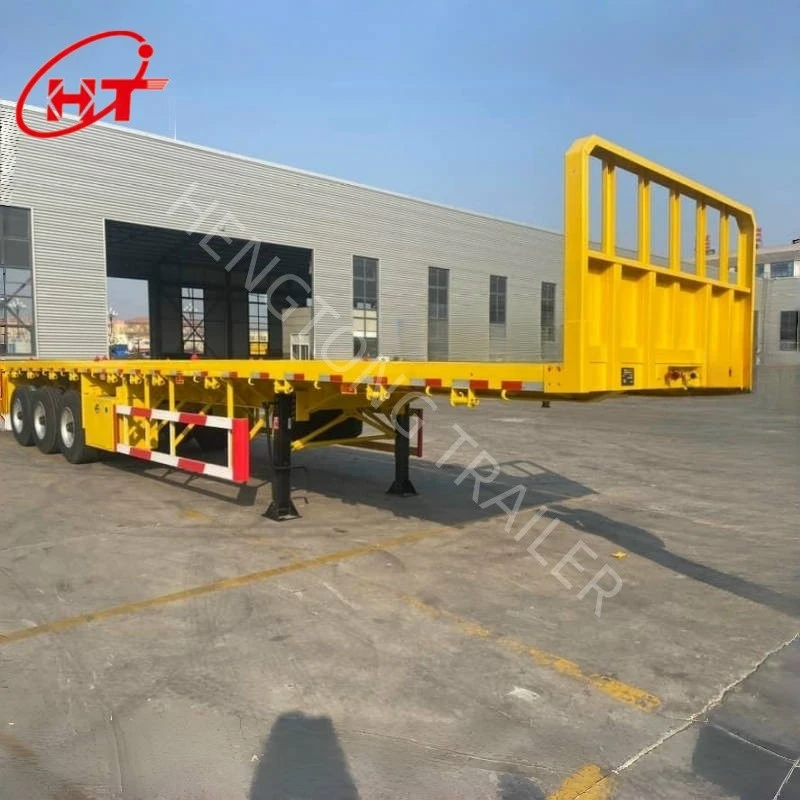

45ft Flat Bed Trailer
A 45ft flat - bed trailer is a popular choice for transporting a wide range of goods, including construction materials, machinery, and large equipment. These trailers typically have a weight capacity ranging from 25 to 45 tons, depending on their design and construction. The open - top design of the flat - bed trailer allows for easy loading and unloading of oversized items, but it also requires careful weight distribution to ensure stability during transit.
Container Skeleton Semi - trailer
Container skeleton semi - trailers are specifically designed to carry shipping containers. They are built to be lightweight yet strong enough to support the heavy weight of the containers. The weight capacity of a container skeleton semi - trailer usually depends on the size of the container it is designed to carry. For example, a trailer designed for 20 - foot containers may have a capacity of around 20 - 30 tons, while a trailer for 40 - foot containers can carry up to 40 tons or more.
Excavator Lowbed Trailer
Excavator lowbed trailers are used for transporting heavy construction equipment such as excavators, bulldozers, and cranes. These trailers have a low - lying deck, which allows for a lower center of gravity and better stability when carrying heavy and tall equipment. The weight capacity of an excavator lowbed trailer can range from 30 to 80 tons or more, depending on the number of axles and the strength of the trailer's frame.
Importance of Staying Within the Weight Limits
Staying within the maximum weight limits of a semi - trailer is of utmost importance for several reasons. Firstly, it is a legal requirement. Violating weight regulations can result in hefty fines, vehicle impoundment, and even suspension of the driver's license. Moreover, overloading a trailer can have serious safety implications. It can cause excessive wear and tear on the trailer's components, such as the tires, brakes, and suspension system. This can lead to mechanical failures, which in turn can increase the risk of accidents on the road.
Overloaded trailers also have a longer stopping distance, making it more difficult for the driver to control the vehicle in emergency situations. In addition, the extra weight can put additional stress on the roads and bridges, leading to premature deterioration of the infrastructure.
Conclusion
In conclusion, the maximum weight a semi - trailer can carry is determined by a combination of factors, including the trailer's design, suspension system, axle configuration, and regulatory limits. As a semi - trailer supplier, I understand the importance of providing our customers with trailers that are not only reliable but also compliant with all relevant regulations. Whether you need a 45ft Flat Bed Trailer for general cargo, a Container Skeleton Semi - trailer for container transportation, or an Excavator Lowbed Trailer for heavy equipment, we have a wide range of options to meet your specific needs.
If you are in the market for a semi - trailer and have questions about weight capacities or any other aspects of our products, I encourage you to reach out to us. Our team of experts is ready to assist you in selecting the right trailer for your business and ensuring that you are fully informed about all the relevant factors. Contact us today to start a discussion about your semi - trailer requirements.
References
- Federal Highway Administration. (2023). Bridge Formula Weights.
- European Union Transport Regulations. (2023). Official Publications of the European Union.
- Trailer Manufacturers' Association. (2023). Technical Specifications for Semi - Trailers.


