


China's Semi-Trailer Export Volume and Key Trends (2023–2025)
1. Export Volume Overview
2023: China exported approximately 280,000 semi-trailers, generating $5.2 billion in revenue, a 12% year-on-year increase driven by post-pandemic logistics recovery.
2024 (Projected): Exports are expected to reach 320,000 units (+14%), with revenue surpassing $6 billion, fueled by demand in emerging markets.
2025 Forecast: Growth may stabilize at 8–10%, with exports nearing 350,000 units, supported by advancements in electric and autonomous trailer technologies.
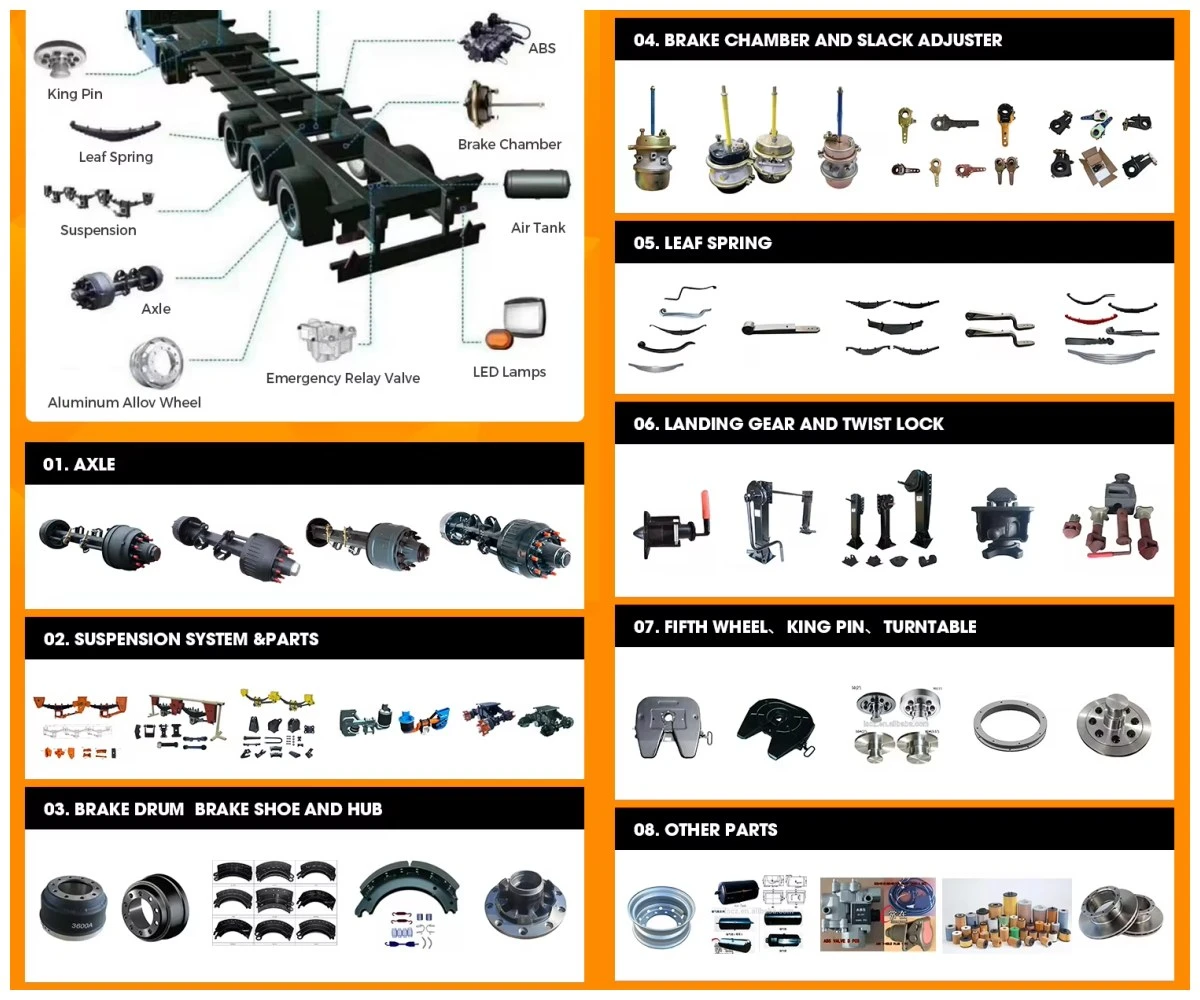
2. Key Export Destinations
Top Markets:
Southeast Asia (30% share): Thailand, Vietnam, and Indonesia prioritize cost-effective logistics solutions.
Africa (25%): Infrastructure development in Nigeria, Kenya, and South Africa boosts demand.
Middle East (20%): UAE and Saudi Arabia favor heavy-duty models for oil and construction sectors.
Europe (15%): Germany and Poland import specialized trailers (e.g., refrigerated, low-emission models).
Latin America (10%): Brazil and Mexico focus on agricultural and container trailers.
3. Growth Drivers
Cost Competitiveness: Chinese manufacturers offer prices 20–30% lower than European/U.S. counterparts.
Policy Support: China's "Belt and Road" initiative funds transport infrastructure projects in partner countries.
Technological Innovation: Adoption of lightweight materials (e.g., aluminum alloys) and smart trailers with IoT sensors.
Global Supply Chain Shifts: Post-COVID rerouting of trade routes increases reliance on Chinese logistics equipment.
4. Challenges
Trade Barriers: Tariffs and anti-dumping investigations in the EU and India (e.g., 15–25% import duties).
Quality Perception: Some markets still associate Chinese products with lower durability, pushing brands like CIMC and Sinotruk to invest in certification (e.g., ISO 9001).
Logistics Costs: Rising global shipping rates (up 18% in 2024) squeeze profit margins.
5. Future Outlook
Electric Semi-Trailers: Pilot exports of battery-powered models to Europe (e.g., DHL partnerships) aim to capture the $3.5B green logistics market by 2025.
Customization: Manufacturers are offering modular designs for niche industries (e.g., cold chain, hazardous material transport).
Regional Hubs: Chinese firms are establishing assembly plants in Mexico and Turkey to bypass tariffs and reduce delivery times.
Sources: China Customs, World Bank Logistics Report 2024, Statista Commercial Vehicle Analysis.
Summary: China's semi-trailer exports are poised for steady growth, leveraging cost advantages and innovation. Strategic diversification into high-value segments and localized production will be critical to sustaining global market leadership.


